
In the world of industrial measurement, the tools you choose shape the outcome of your mission. The pros and cons of laser trackers and laser scanners highlight how each technology aligns with specific challenges. From capturing intricate surface details to ensuring large-scale alignment, these systems offer distinct advantages. Understanding their roles is key to making confident, mission-critical decisions.
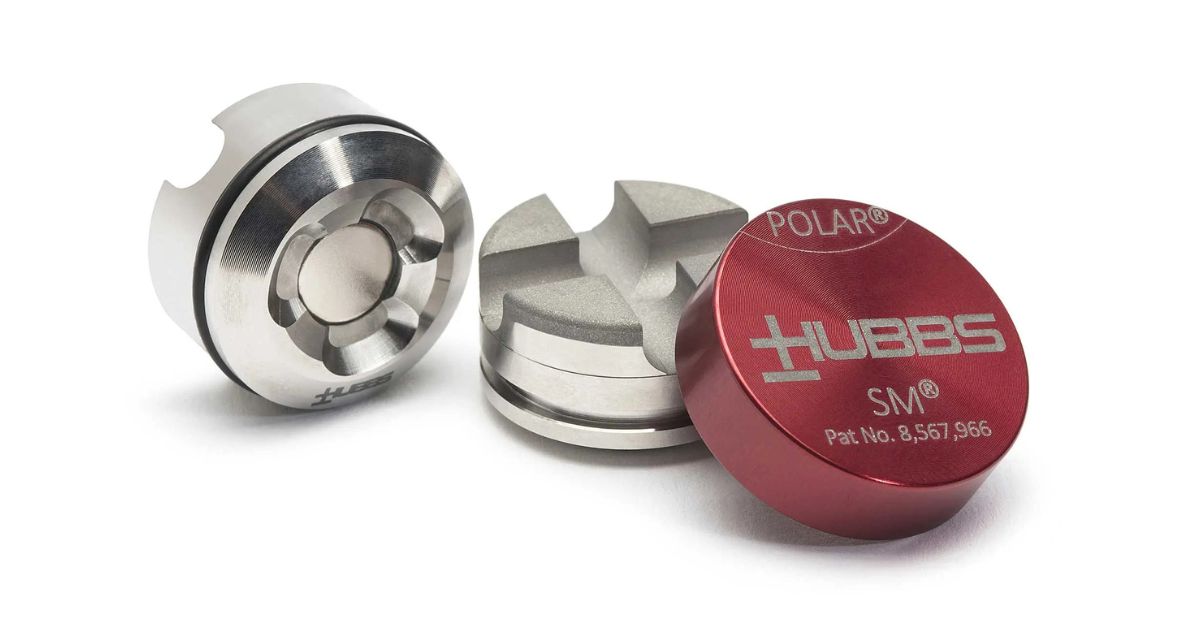
Laser trackers have long been the gold standard for large-volume, high-accuracy measurement. These systems operate by sending a laser beam to a retroreflective target, typically a spherically mounted retroreflector (SMR), held against the object being measured. The beam is reflected back to the tracker, which calculates the 3D coordinates of that specific point with extreme precision.
This method excels in applications requiring alignment, assembly, and inspection of large components where discrete point data is critical.
Laser trackers offer superior accuracy compared to almost any other large-scale portable measurement device. They can maintain .0001-level accuracy over ranges spanning tens of meters. This capability is vital for industries such as aerospace, where wing assembly requires precision over long lengths.
One of the tracker’s strongest assets is its ability to measure moving targets. Because the laser “locks on” to the SMR, operators can track components during assembly in real-time. This helps engineers to adjust parts into position while watching the coordinate values update instantly. Real-time measurement notably streamlines alignment tasks.
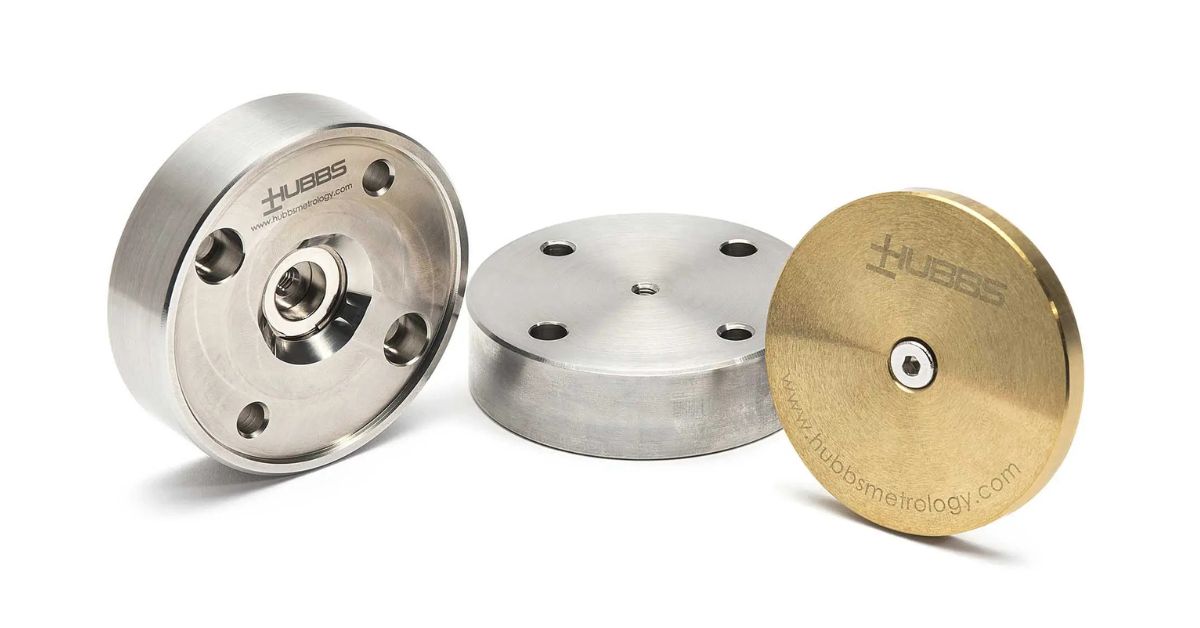
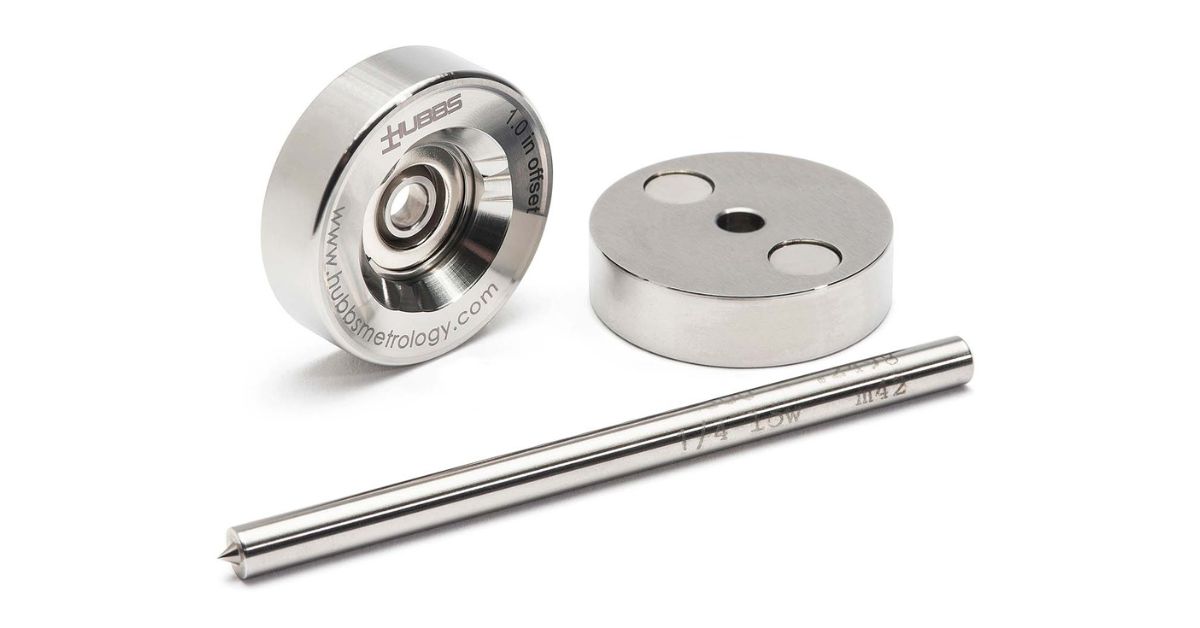
By using different probes and accessories, trackers can measure hidden points or features, such as holes and slots, with high fidelity. Using 1.5 SMR mounts enables stable, repeatable measurements across various surfaces, ensuring that critical hard-to-reach data points are captured accurately.
Manufacturers design modern laser trackers to withstand harsh industrial conditions. They often feature IP ratings that protect against dust and moisture. This makes these trackers reliable tools in shipyards or active manufacturing floors where environmental control is difficult to maintain.
The beam must have an unbroken line of sight to the SMR. If an object or person breaks this beam, the connection is lost. The operator must then reacquire the beam, which can slow down the measurement process in crowded or cluttered environments.
Laser trackers collect data point by point. While they are incredibly accurate, capturing complex surface geometry requires moving the SMR to every single point of interest. This manual process is time-consuming compared to systems that automatically capture millions of points per second.
Successful operation relies heavily on the technician’s skill. The operator must hold the SMR correctly against the surface (scrubbing the target) to ensure that the SMR’s center accurately represents the surface point. Inconsistent handling can introduce user error into the data.
Because trackers capture discrete points, they are poor tools for analyzing overall surface deviations, such as waviness or deformation across a whole panel. You only get data where you physically place the target, potentially missing defects between those points.
Laser scanners take a different approach. Instead of measuring a single point, they sweep a laser line or pattern across a surface to capture millions of points per second. This creates a “point cloud,” or a dense digital representation of the physical object.
Scanners are ideal for reverse engineering, archiving, and inspecting complex free-form shapes where total surface coverage is more valuable than discrete point accuracy.
Speed is the primary advantage of laser scanning. A scanner can capture the entire geometry of a complex part, such as a propeller blade or engine casing, in minutes. This massive data throughput drastically reduces the time required on-site compared to point-by-point measurement.
The dense point cloud provides a complete map of the surface. Engineers can generate color maps comparing the physical part against the CAD model, instantly revealing high spots, low spots, and deformations that a tracker might miss between points.
Scanners measure without touching the object. This is essential for measuring soft, pliable materials like clay models, foam, or uncured composite parts that would deform under the pressure of a hard probe or SMR.
Since the scanner captures data automatically across a field of view, the results are less dependent on the operator’s manual technique. Once the parameters are set and the scan begins, the machine handles the data collection consistency to reduce human error.
While scanners are accurate, they generally do not match the single-point precision of a laser tracker. The “noise” in a point cloud means that defining the exact center of a hole or edge can be less precise than physically probing it with a tracker.
The blessing of millions of points is also a curse. Point cloud data files are enormous, often reaching gigabytes in size. Processing, cleaning, and aligning these datasets requires powerful computers and specialized software, which adds to post-processing time.
Optical scanners struggle with certain surface types. Highly reflective (shiny) surfaces can scatter the laser light, while extremely dark surfaces may absorb it. Technicians often need to spray parts with a matte developer to improve data quality. This adds a step to the process and requires cleaning afterward.
Laser scanners can produce erroneous data at sharp edges or boundaries of an object. The laser beam might split or reflect unpredictably at a corner, creating “phantom points” or rounding off sharp edges in the digital model.
Ideally, metrology departments should not view this as an either/or proposition. The most sophisticated measurement strategies often employ a hybrid approach.
In this scenario, a laser tracker establishes a high-accuracy global coordinate network around a large object. Then, a laser scanner (sometimes mounted on the tracker or tracked by it) captures the dense surface detail. This method combines the best of both worlds: the global accuracy and scale of the tracker with the rich surface detail of the scanner.
Weighing the pros and cons of laser trackers and laser scanners demonstrates how each technology serves a distinct purpose in advanced industrial measurement. HUBBS remains focused on providing the precision tools, accessories, and expertise required for high-stakes projects. By matching the right technology to each mission’s challenges, your team achieves dependable results on every project.