
Imagine a technician crouched in the hull of a new vessel, laser tracker humming quietly as it verifies the precision of fixtures. Or a quality lead, glancing at a digital readout while overseeing a satellite module that demands flawless alignment. The stakes in large-scale manufacturing are measured in millions, and there’s no second chance at launch.
In these critical environments, the tools you choose and how you deploy them define careers and reputations. The industry standards for laser tracking systems are the framework trusted by organizations that treat precision as mission-critical. Here’s a guide to help you understand the vital information, ensuring safety, precision, and accuracy.
A cohesive set of international and national standards governs the performance, calibration, and use of laser trackers. These documents provide a common language for manufacturers and users to define and verify system capabilities.
The International Organization for Standardization (ISO) and the American Society of Mechanical Engineers (ASME) publish key documents that define testing procedures for coordinate measuring systems. While no single standard is written exclusively for laser trackers, several are directly applicable.
This series of standards specifies the acceptance and reverification tests for coordinate measuring machines (CMMs). While originally developed for gantry-style CMMs, its principles for evaluating length measurement error (E) and probing error (P) are widely adopted for portable systems such as laser trackers.
This is the most specific standard for laser trackers in the United States. It outlines methods for performance evaluation, defining tests for ranging accuracy, angular accuracy, and overall system performance in a volumetric space. It provides a structured procedure for users to verify that a system performs to its stated specifications.
These German standards from the Association of German Engineers (VDI) offer another rigorous framework for evaluating optical 3D measuring systems. They are well respected globally and often used in parallel with, or as an alternative to, ASME standards, particularly in Europe.
Traceability to the National Institute of Standards and Technology (NIST) or a similar national metrology institute is a core concept. It means you can relate all measurements back to a primary standard through an unbroken chain of calibrations. This provides confidence that measurements made in different locations or at varying times are comparable and accurate.
Industry standards serve a practical purpose. They guide the specific metrics and operational practices that define how these systems perform on the floor.
Laser trackers are optical instruments, making them sensitive to their environment. Temperature is the most significant variable. Changes in air temperature, pressure, and humidity affect the refractive index of air, thereby altering the path of the laser beam.
To counteract these potential errors, high-end systems use weather stations to monitor conditions and apply real-time compensation. Air turbulence, vibrations from heavy machinery, and unstable ground can also degrade performance.
A laser tracker system is only as strong as its weakest link. The quality of its accessories, including targets, mounts, and stands, is just as important as the tracker itself.
The SMR, or target, is the component that the laser beam reflects off. The most common type is the corner cube retroreflector housed in a precision sphere. The quality of the SMR, specifically the centering of the optic within the sphere, directly impacts measurement accuracy. Damaged or low-quality targets introduce significant error.
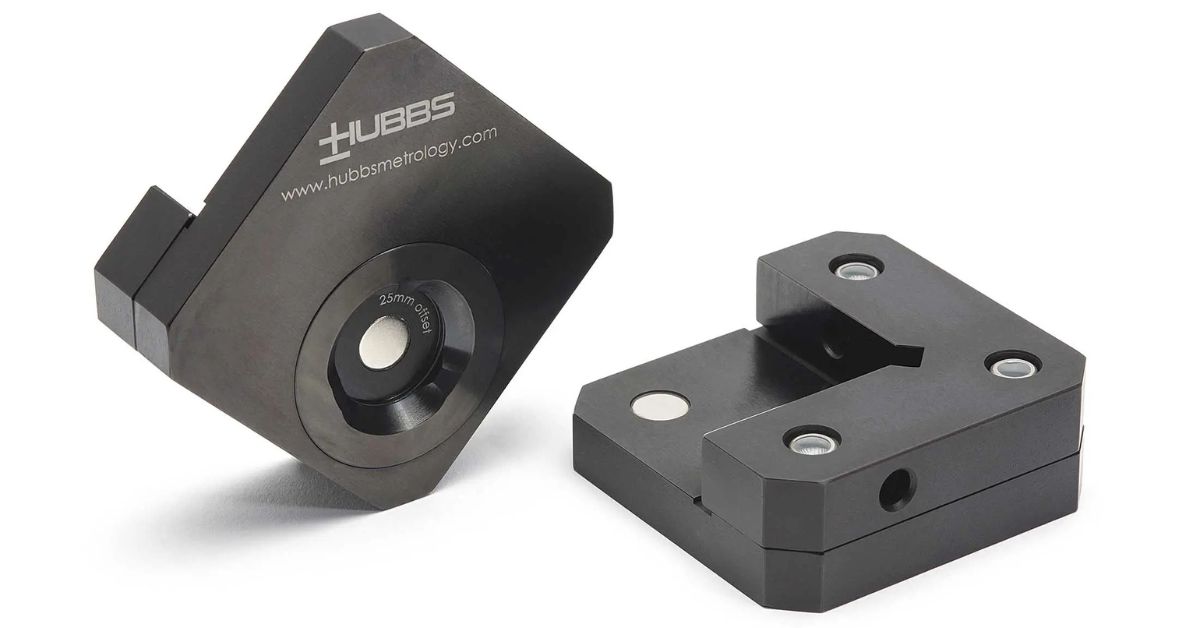
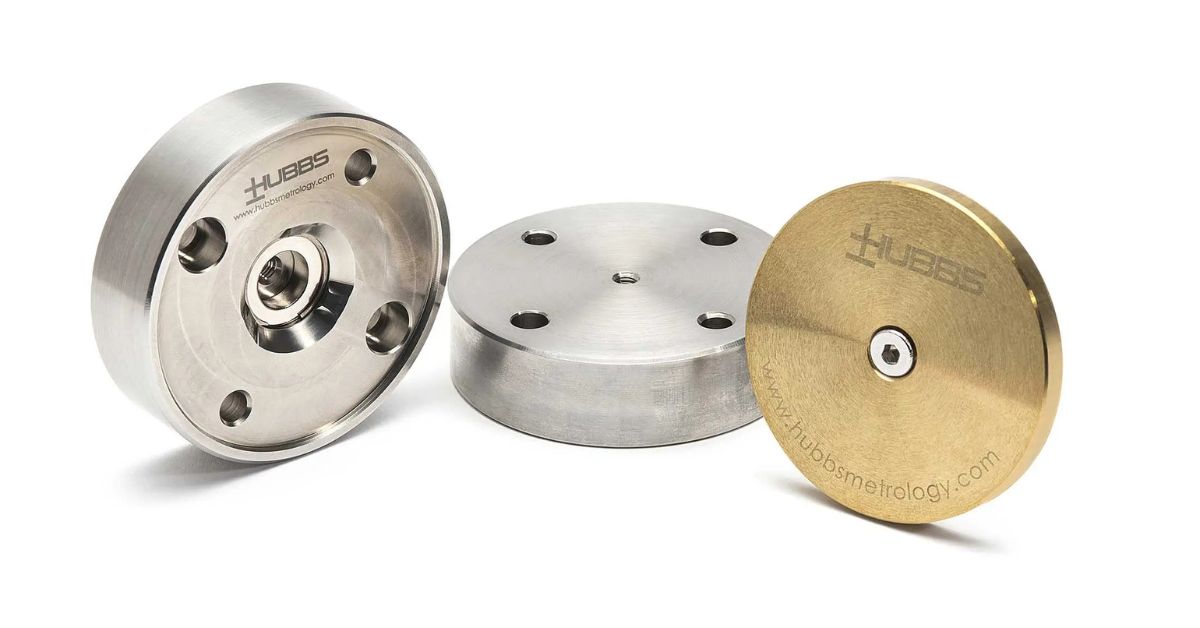
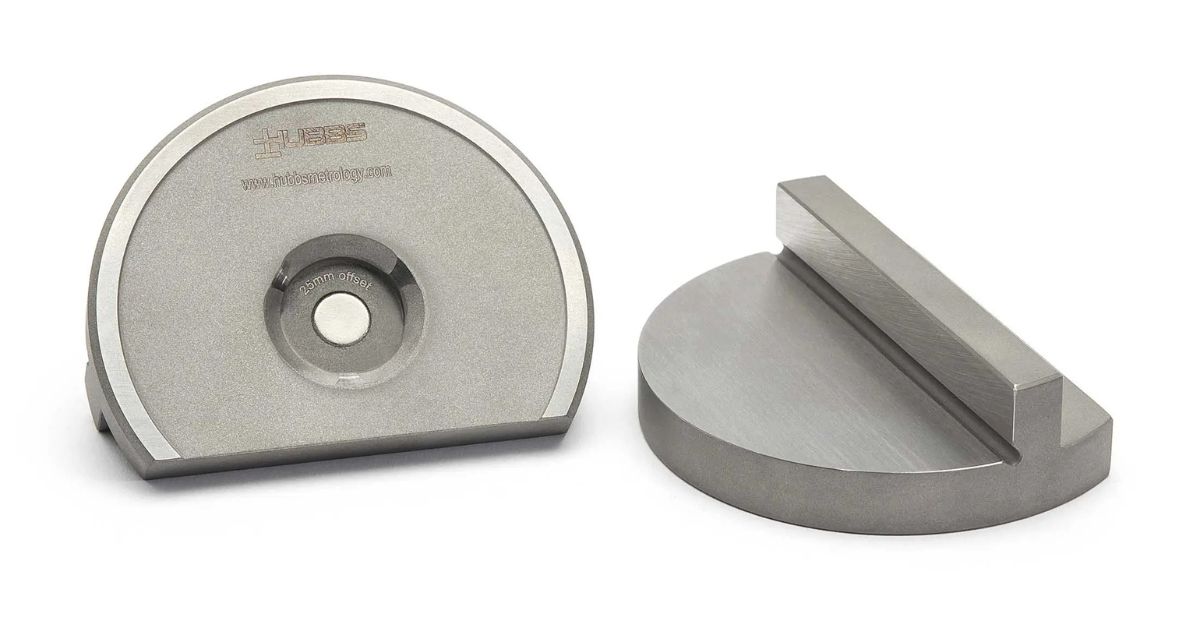
Precision accessories are necessary to position SMRs correctly on the object being measured. This includes nests that provide a repeatable seating for the SMR, various adapters, and mounts that hold the targets in place. High-quality 1.5 laser tracker sphere mounts and other tooling are machined to exacting tolerances to avoid introducing error. The stability of the tripod or stand holding the tracker is also paramount; any movement during measurement will invalidate the results.
A tracker’s performance must be regularly verified. This involves both formal calibration and routine field checks.
Formal calibration is typically performed annually by the original equipment manufacturer (OEM) or an accredited laboratory. During this process, the manufacturer adjusts the tracker and certifies that it meets the original specifications, with its performance documented in a certificate traceable to national standards (e.g., NIST).
Users should not wait a full year to check their system. Interim checks, performed more frequently (daily, weekly, or monthly), provide confidence that the system is operating correctly. These checks often involve measuring a certified reference artifact, such as a scale bar or a ball bar. Comparing the measured values to the artifact’s known certified values reveals any drift or malfunction in the system.
When acquiring a laser tracking system, it is vital to create a checklist based on these standards.
High-quality accessories from specialists like HUBBS are designed to support these compliant workflows, providing the stable, precise, and reliable tooling needed to achieve accurate results.
By adhering to a framework built on established best practices, organizations can confidently deploy laser trackers for their most critical applications. A deep understanding of the industry standards for laser tracking systems transforms these powerful tools from complex instruments into reliable sources of truth for manufacturing and quality control.